
Close Menu
    Facebook X (Twitter) Instagram
    SciTechDaily
    • Biology
    • Chemistry
    • Earth
    • Health
    • Physics
    • Science
    • Space
    • Technology
    Facebook X (Twitter) Pinterest YouTube RSS
    SciTechDaily
    Home»Health»New Wireless Device Uses Light To Treat Cancer
    Health

    New Wireless Device Uses Light To Treat Cancer

    By University of Notre DameJuly 13, 2024No Comments4 Mins Read
    Facebook Twitter Pinterest Telegram LinkedIn WhatsApp Email Reddit
    Share
    Facebook Twitter LinkedIn Pinterest Telegram Email Reddit
    Implantable LED Device for Fighting Cancer
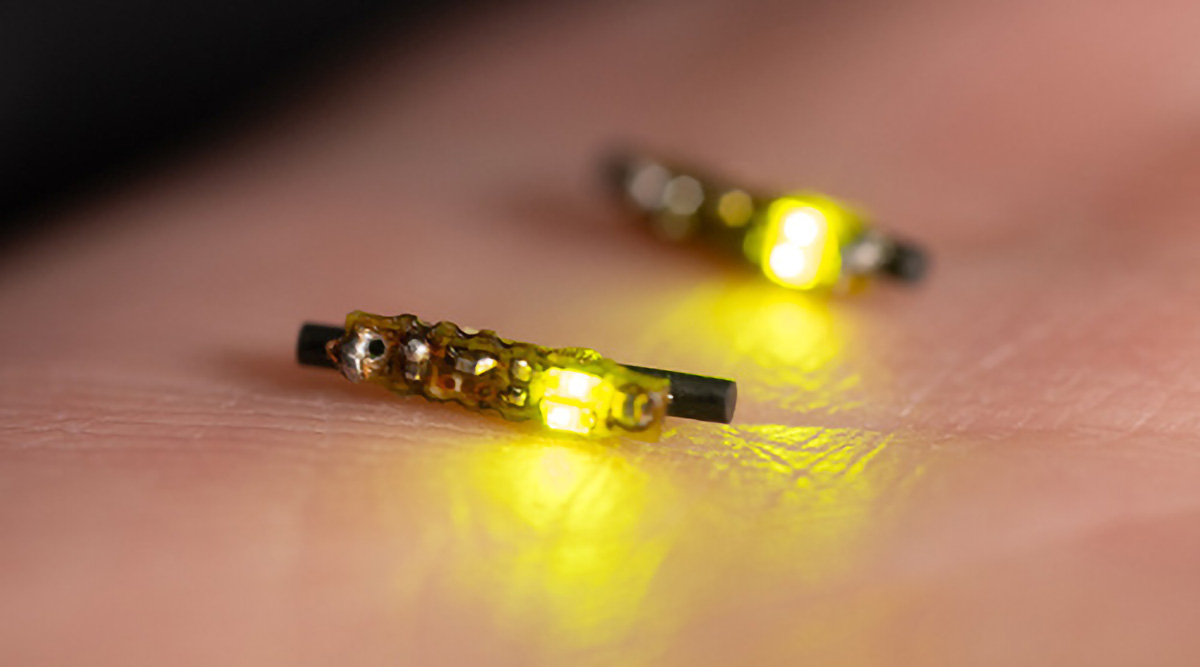
    Researchers at the University of Notre Dame have developed a groundbreaking wireless LED device that can be implanted to treat hard-to-reach cancers. This device, used with a light-sensitive dye, kills cancer cells and stimulates the immune system to target cancer more effectively. It employs green light, which triggers a robust immune response, and promotes a form of cell death that enhances immune activity. The device’s potential for remote activation and treatment monitoring marks a significant advancement in treating deep-seated cancers. This research is supported by the university’s STIR grants, aimed at boosting interdisciplinary projects that impact health, environment, and technology. Credit: University of Notre Dame

    Notre Dame scientists have created an implantable wireless LED device that uses light and a special dye to kill cancer cells and activate the immune system, offering a new approach to treat internal cancers effectively.

    Specific forms of light, when paired with a light-activated drug, can serve as an effective and non-invasive treatment for cancers on or near the skin. However, cancers located deep within the body—shielded by tissues, blood, and bone—remain inaccessible to the therapeutic benefits of light.

    To bring light’s benefits to these harder-to-access cancers, engineers and scientists at the University of Notre Dame have devised a wireless LED device that can be implanted. This device, when combined with a light-sensitive dye, not only destroys cancer cells, but also mobilizes the immune system’s cancer-targeting response. The research was published in Photodiagnosis and Photodynamic Therapy.

    The Role of Light Color in Treatment

    “Certain colors of light penetrate tissue deeper than other ones,” said Thomas O’Sullivan, associate professor of electrical engineering and co-author on the paper. “It turns out that the kind of light — in this case green — that doesn’t penetrate as deeply has the capability of producing a more robust response against the cancer cells.”

    Before the light can be effective in destroying cancer cells, a dye with light-absorbing molecules must be administered to the cells. The device turns on, the dye transfers the light into energy and that energy makes the cells’ own oxygen toxic — in effect, turning the cancer cells against themselves.

    While other treatments also weaponize the cells’ own oxygen, this device causes a particularly serendipitous form of cell death.

    “Working together, biochemistry graduate student Hailey Sanders and electrical engineering graduate student SungHoon Rho perceptively noted that the treated cells were swelling, which is the hallmark of a kind of cell death, pyroptosis, that’s particularly good at triggering the immune response,” said Bradley Smith, the Emil T. Hofman Professor of Science and co-author on the paper.

    “Our goal is to induce just a little bit of pyroptotic cell death, which will then trigger the immune system to start attacking the cancer.”

    Future Research and Applications

    In future studies, the device will be used in mice to see whether the cancer-killing response initiated in one tumor will prompt the immune system to identify and attack another cancerous tumor on its own.

    O’Sullivan noted that the device, which is the size of a grain of rice, can be injected directly into a cancerous tumor and activated remotely by an external antenna. The goal is to use the device not only to deliver treatment but also to monitor the tumor’s response, adjusting signal strength and timing as needed.

    Reference: “Miniature wireless LED-device for photodynamic-induced cell pyroptosis” by Sunghoon Rho, Hailey S. Sanders, Bradley D. Smith and Thomas D. O’Sullivan, 9 May 2024, Photodiagnosis and Photodynamic Therapy.
    DOI: 10.1016/j.pdpdt.2024.104209

    This research was one of four projects funded by the first Seed Transformative Interdisciplinary Research (STIR) grants. Initiated in 2023 by the Notre Dame College of Science and College of Engineering, these grants are designed to jump-start science and engineering research projects in human health, the environment, and information technologies.

    Never miss a breakthrough: Join the SciTechDaily newsletter.
    Follow us on Google and Google News.

    Biomedical Engineering Cancer LEDs Light University of Notre Dame
    Share. Facebook Twitter Pinterest LinkedIn Email Reddit

    Related Articles

    STINGing Tumors With Nanoparticles – Boosting the Body’s Innate Immune System to Fight Cancer

    Scientists “Farm” Natural Killer Cells Using a Microfluidic Chip in Novel Cancer Fighting Approach

    Timing the Life of Antimatter Particles – Less Than 1/50,000,000 Second – May Lead to Better Cancer Treatment

    Ultra-Sensitive Cancer DNA Detector Created With Crumpled Graphene

    New Super-Charged Treatment Boosts T-Cell Therapy

    FDA-Approved Compound Prevents Breast Cancer Cells From Spreading

    Researchers Reveal How Chronic Inflammation Can Lead to Cancer

    Injectable, Spontaneously Assembling Vaccines Could Fight Cancer

    Therapeutic Cancer Vaccine Begins Human Clinical Trials

    Leave A Reply Cancel Reply

    • Facebook
    • Twitter
    • Pinterest
    • YouTube

    Don't Miss a Discovery

    Subscribe for the Latest in Science & Tech!

    Trending News

    Wasp Colonies Explode Into Violence After Losing Their Queen

    Scientists Create “Living Plastic” That Self-Destructs in Just Six Days

    Your Blood May Carry a 700-Million-Year-Old Secret

    Scientists Discover Some “Zombie Cells” May Actually Help You Live Longer

    Earth May Be Seeding Venus With Life, According to New Research

    What Scientists Found Inside a 117-Year-Old Woman Reveals New Clues to Long Life

    Scientists Discover Mysterious Creature Living in the Great Salt Lake – and It Exists Nowhere Else on Earth

    It’s Alive? Surprising Discovery Changes What We Know About Fog

    Follow SciTechDaily
    • Facebook
    • Twitter
    • YouTube
    • Pinterest
    • Newsletter
    • RSS
    SciTech News
    • Biology News
    • Chemistry News
    • Earth News
    • Health News
    • Physics News
    • Science News
    • Space News
    • Technology News
    Recent Posts
    • Scientists Crack Major Ammonia Problem With a Platinum Catalyst Breakthrough
    • MIT Engineers Solve a Major Lidar Problem That Has Stumped Researchers for Years
    • NASA’s X-59 Sonic Boom Killer Is Ready for Its Biggest Test Yet
    • Why Some Cancers Turn Deadly: Researchers Uncover a Hidden Trigger
    • The Best Exercise Combination for Longevity, According to a 30-Year Study
    Copyright © 1998 - 2026 SciTechDaily. All Rights Reserved.
    • Science News
    • About
    • Contact
    • Editorial Board
    • Privacy Policy
    • Terms of Use

    Type above and press Enter to search. Press Esc to cancel.